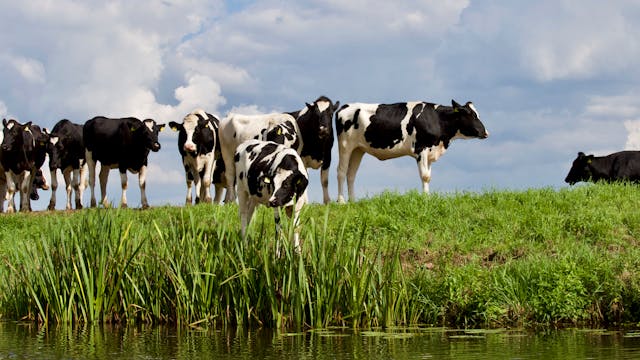
With 70% of the UK’s land devoted to agriculture, critical challenges like soil degradation, competing land uses, and farm concentration threaten the foundation of our food system. Explore the pressing issues facing our agricultural landscape and the urgent need for sustainable solutions.
70% of the country’s total area is used for agriculture. This farmland is crucial, providing us with food and a range of essential resources. However, it is under threat. It faces encroachment by urban development, pollution and compaction from intensive farming, as well as the broader impacts of climate change and biodiversity loss.
If we continue down this path, we jeopardise the land’s ability to sustain us.

13% of agricultural land is at risk of erosion
It takes 500 years to form just 1 cm of soil
25% of soils are at risk of compaction
50% of soil life and organic matter already lost
90-day soil drought will happen 6x more frequently by 2060
Since 2010, the UK has lost 56,000 ha of prime farmland to urbanisation
The UK have lost 58% of its farmland birds since 1970
16% of all animal species in Great Britain are at risk of being lost
Soil degradation and water pollution
Our land is experiencing severe degradation due to the use of synthetic fertilisers and pesticides, which harm essential insects and invertebrates and pollute rivers and waterways, and the destruction of habitats and food sources for wildlife. Heavy machinery compacts the soil, accelerating erosion and depleting vital resources.
Climate Change
Conventional farming produces about 20 % of global greenhouse gas emissions, mainly from fossil fuels, nitrogen fertilisers, and livestock methane. It worsens climate change, which in turn brings droughts, erratic rain, and soil damage, making food production increasingly unsustainable.
.jpg)
Artificialisation
Since 2010, the UK has lost 56,000 hectares of farmland to urbanisation - about a football pitch every 90 minutes. Once built on, land is extremely hard and costly to reclaim, bringing us closer to irreversible farmland loss.

Biodiversity collapse
Intensive farming, centred on mechanisation and synthetic inputs, has led to a reduction in biodiversity - both cultivated and wild. The focus on uniform crops and animal breeds has narrowed genetic diversity, while changes to land use and the use of pesticides have reduced habitats such as trees, hedgerows, and ponds, making ecosystems less resilient.
66% of farmers in the UK are over 55
The average farm in England costs £2.2 million
2/3rd of those aspiring to start their own farm don't have a farming background
Disappearing farms
11 million hectares of farmland set to change hands in the coming years. Yet, most retiring farmers are not being replaced, leading to a decline in active farming. In the past decade, the UK has lost one-fifth of its farms, and this downward trend shows no signs of slowing.
Land concentration
UK farms have become fewer but larger, with average sizes doubling since the 1970s due to policies favouring consolidation. While this has boosted production, it has created highly specialised, capital-intensive farms, often unaffordable for new entrants, and expensive to inherit.
Financialisation
As investment in farming has increased, new legal structures have emerged to attract external capital. These open-capital farming companies allow non-farming investors to buy shares and influence farm management. While this brings greater financial capacity, especially for land acquisition, it also accelerates land concentration and can steer production decisions towards profitability over environmental or social goals.
It takes as much land abroad than in the UK to feed us and 46% of our food is imported
The land required to produce the beef and lamb consumed in the UK exceeds
the land area of the UK itself. Such is the magnitude of our imports.
85% of UK’s agricultural land is used for livestock and their feed
Fruits and vegetable today are less nutritious than 80 years ago: 50% less iron, copper, sodium, 10% less magnesium
A scale problem
The UK imports 46% of its food, making it heavily dependent on global supply chains. Although it is 76% self-sufficient in production terms, climate change, soil degradation, and biodiversity loss threaten domestic output. This reliance on imports reduces food quality control, increases pollution from transport, and exposes the UK to global disruptions.
Sanitary and nutrition crises
Ultra-processed foods and crops grown on depleted soils contribute to poor nutrition and rising rates of obesity, diabetes, and heart disease. Intensive, chemical-dependent farming of a few major crops like maize, wheat, and soy degrades soil, pollutes water, and drives deforestation - raising both health risks and the potential for new diseases.

Competing uses
Agricultural land faces rising competition from bioenergy and renewables. By 2020, 2.1% of UK arable land was used for bioenergy crops (up 30% since 2019). Meanwhile, 85% of farmland supports livestock and feed, with land for beef and lamb exceeding the UK’s land area - illustrating the growing strain on agricultural resources.